On July 11, the Diocese of Cape Town in the Anglican Church of Southern Africa passed a resolution at its Synod expressing ‘deep sorrow and heartfelt apology to brothers and sisters from across the African continent who have experienced fear, rejection or hostility’ within South Africa and affirming that foreign nationals ‘are valued members of Christ’s Body and cherished members of our diocesan family’.
South Africa, at the last census in 2022, reported 2.4 million international migrants within its borders, but the number is thought to have risen since then due to a multitude of factors, including groups seeking asylum from other African nations experiencing conflict, climate-related hardships and unrest. The government has recently acknowledged failures concerning border control practices but has urged the people against violence and attempts at establishing vigilante control.
Despite this, the country has experienced a fast-moving campaign of nationalism, resulting in rioting, looting and the death of at least four foreign nationals in recent weeks. The resolution calls for the recent wave of xenophobic violence against foreign nationals to be stemmed, replaced by the knowledge that diversity enriches the Church.
The Synod of the Diocese of Cape Town has now joined its voice to the call for order and peace, affirming the need for the ‘real and complex immigration challenges’ to be allowed to be ‘addressed lawfully, justly and within the framework of the Constitution of the Republic of South Africa’.
The resolution is a kind of response to the Charge to the 68th Session of the Synod of the Diocese of Cape Town from the Most Revd Dr Thabo Makgoba, Archbishop of Cape Town and Primate of Southern Africa. This Charge invited the Synod to consider, ‘What does justice look like for South Africans in poor communities… who fear that migrants willing to work for low wages are stealing their opportunities? What does justice look like for migrants who are fleeing conflict zones in which their very lives are at risk, or whose governments are so corrupt that they have virtually collapsed their countries' economies? What would it look like to restore the dignity of migrants as those who, just like us, are made in the image of God?’
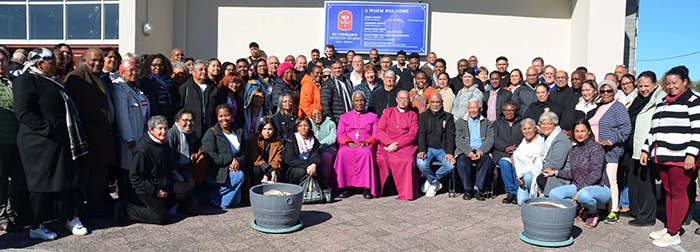
The resolution is included in full below.
A Resolution adopted by the Synod of the Diocese of Cape Town on July 11, 2026:
Christian hospitality, repentance and the celebration of diversity
Whereas:
Archbishop Thabo has reminded us in his Charge (opening speech to the Synod), through the words of Mordecai to Esther, ‘Who knows whether you have not come to the kingdom for such a time as this?’ (Esther 4:14), a summons to courage, moral agency and costly action in the face of injustice;
The book of Esther also records how Haman was inciting hatred, ‘There is a certain people dispersed among the people…their customs are different… it is not in the king’s interest to tolerate them’;
And whereas:
South Africa is facing a crisis of crime, unemployment and a failure in service delivery, and the justified anger over this is being deliberately blamed on foreign migrants by populist movements, and foreign nationals are being scapegoated, unleashing hate speech, vigilantism, violent attacks and looting;
South Africa faces real and complex immigration challenges which must be addressed lawfully, justly, and within the framework of the Constitution of the Republic of South Africa;
And whereas:
The Anglican Church of Southern Africa is enriched by the diversity of peoples, languages and cultures represented within its worshipping communities, reflecting God’s vision of every tribe, language, people and nation gathered before the throne (Revelation 7:9);
Many members of our Diocese who are from elsewhere in Africa worship faithfully in our parishes [and] are valued members of the Body of Christ;
Many congregations also offer hospitality to churches in their buildings and halls;
And whereas:
Recent acts of xenophobic violence in South Africa have resulted in the intimidation, displacement and suffering of many foreign nationals, forcing vulnerable families, including women, children and infants, to flee their homes and endure exposure to the harsh winter conditions while awaiting humanitarian assistance. Within our own Diocese, families with small children were forced to sleep in freezing winter conditions for many nights both in District Six and later in Epping. The South African Human Rights Commission has expressed grave concern over growing vigilantism and the failure to provide humanitarian aid for those affected;
And recognising:
1. The ongoing process of the Bishops of the Western Cape in conversation with Malawian congregations; and
2. The generous humanitarian aid given from members of the diocese.
This Synod:
1. Expresses its deep sorrow and heartfelt apology to our brothers and sisters from across the African continent who have experienced fear, rejection or hostility within our country, affirming that they are valued members of Christ’s Body and cherished members of our diocesan family;
Believing we should not ‘remain silent at this time’ (Esther 4:14), we also apologise for our failure to speak out against hate speech and xenophobia;
Respectfully requests the Archbishop to write an open letter on behalf of the Diocese to all affected countries and in particular to the bishops of Mozambique, Malawi and Zimbabwe;
2. Reaffirms that the diversity of peoples, languages, cultures and nations within our Diocese is not a problem to be managed but a gift from God to be celebrated, nurtured and protected. We recognise that there are not only three languages spoken in our Diocese. We call for a ‘listening forum’ to be set up to listen to members of our congregations and those using our halls, to hear from them how the church can best respond, and that these findings should be taken to Clergy Conference in October;
3. Calls upon all Anglicans to reject xenophobia, prejudice, vigilantism and every form of discrimination, and instead become agents of reconciliation, peace, justice and compassionate service within our communities;
4. Resolves to set up ‘courageous conversation’ with leaders of [anti-immigration movements, such as] the March and March, Operation Dudula-Western Cape and others to identify the root causes and solutions;
5. In partnership with the WC-SACC, calls upon the City of Cape Town and the Provincial Government of the Western Cape to fulfil their constitutional obligation to uphold the rule of law, in accordance with the Constitution and the principles affirmed by the South African Human Rights Commission and to provide the necessary humanitarian aid in cases of all disasters;
6. Commit ourselves to prayer, advocacy and practical support for all those affected by xenophobic violence, especially those displaced from their homes and those working to provide humanitarian relief, believing that for such a time as this God calls the Church to bear witness to the reconciling and transforming love of Jesus Christ.
7. Respectfully requests that the outcome of this resolution be drafted and circulated in a public statement.
End of statement.
More information
See the Charge from Archbishop Thabo to the 68th Session of the Synod of the Diocese of Cape Town here.
See the resolution on the Anglican Church of Southern Africa’s website.
Learn about how Anglicans across the Communion are responding to the migration crisis.